How to Wholesale Real Estate in Michigan: 2025!
What is a Salespersons & Broker vs Wholesale Investor (Sales vs. Assignments.)
Earn $3K/Month From On & Off Market Properties
How to Wholesale Real Estate!
What is The Difference in Sales vs. Assignments?
WHOLESALING Real Estate is an EXIT STRATEGY!; YOU ARE A BUYER!

How to Wholesale Michigan Real Estate
Wholesaling real estate in Michigan offers a low-barrier entry into real estate investing, allowing individuals to generate significant profits without owning properties, securing large capital, or holding a real estate license.
By acting as a middleman, wholesalers secure properties under contract at a discount and either assign the contract to an end buyer or close and resell the property for a fee.
Michigan’s real estate market, with its mix of urban revitalization in cities like Detroit, steady growth in Grand Rapids, and affordable rural areas, presents unique opportunities for wholesalers.
However, success demands a thorough understanding of legal requirements, effective marketing, precise financial calculations, and creative deal structuring.
Disclaimers!: The Real Estate HUB is a education platform, Furthermore, The Real Estate HUB and its affiliates are not licensed financial advisors or consultants, nor are they lawyers or attorneys at law. The Real Estate HUB is not a licensed real estate broker. Please DYOR and speak to professionals. We claim NO responsibility for any financial investment or legal decisions you make. The Real Estate HUB is an Amazon & Sovrn Commerce affiliate. Some links in this article will take you to Treh.MI favorite products, and we may earn a commission from your purchases at no extra cost to you.

https://medium.com/@TheRealEstateHUB/subscribe
This guide provides a step-by-step roadmap for wholesaling in Michigan, covering everything from navigating state laws to finding motivated sellers and closing profitable deals.
Understanding Real Estate Law: Salespersons & Brokers vs. Wholesale Investing as the Principal (Sales vs. Assignments)
Michigan’s Real Estate Licensing FrameworkIn Michigan, real estate activities are governed by the Michigan Occupational Code (Article 25), administered by the Department of Licensing and Regulatory Affairs (LARA).
To wholesale legally, it’s critical to distinguish between operating as a licensed real estate professional (salesperson or broker) and wholesaling as a principal.

- Real Estate Salesperson or Broker: Licensed professionals represent clients (buyers or sellers) in real estate transactions, earning commissions (typically 5–6% of the sale price). To become a licensed salesperson in Michigan, you must:
- Complete 40 hours of pre-licensing education.
- Pass the state licensing exam administered by PSI Services.
- Work under a licensed broker.
- Brokers require an additional 90 hours of education, three years of experience, and a separate exam.
- Licensed agents are bound by fiduciary duties, such as loyalty, full disclosure, and acting in the client’s best interest, as outlined in the Michigan Real Estate License Law (MCL 339.2501).
They must comply with strict advertising and contract regulations. For example, marketing a property without a listing agreement or client consent could violate these rules.
- Wholesale Investing as the Principal: Wholesaling involves securing a property under a purchase agreement and either assigning that contract to an end buyer for a fee or closing on the property and reselling it.
As a wholesaler, you act as a principal, meaning you control the contract, not the property itself.
The Art of Wholesale Investing in Michigan!: The Wholesale Investment Method & Guide to Real Estate Investing, Backed by Michigan’s Courts. Low-to-No Capital Investment for Aspiring Investors! $13.62 USD
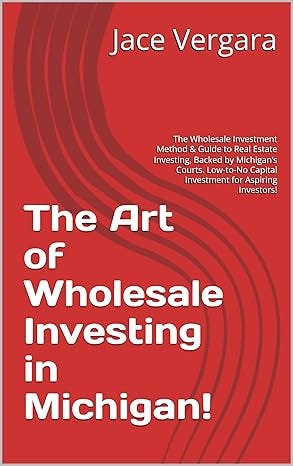
Key points:
- No License Required: You don’t need a real estate license in Michigan to wholesale if you’re marketing your contractual interest rather than representing others.
- Avoid Brokering: Marketing properties you don’t have under contract or acting as an agent for others without a license is considered unlicensed brokerage and violates Michigan law.
- Contract Focus: Wholesaling falls under the Uniform Commercial Code (UCC) for contract assignments, not real estate brokerage laws.

Sales vs. Assignments
- Sales: In a traditional sale, a licensed agent lists a property, markets it, negotiates terms, and facilitates closing, earning a commission.
The process involves formal representation, often through the Multiple Listing Service (MLS), and adherence to fiduciary duties.

- Assignments: In wholesaling, you secure a property under contract at a discounted price and assign your contractual rights to an end buyer for a fee (typically $5,000–$20,000). You don’t take ownership; the end buyer closes directly with the seller, and you collect the assignment fee.
Example: You negotiate a contract to buy a distressed property in Flint for $40,000. You assign the contract to a rehabber for $50,000, earning a $10,000 fee.
The rehabber closes with the seller, and you’re paid at closing.
Legal Considerations for Wholesale Investors to Wholesale legally in Michigan:

- Disclose Your Role: Clearly state in contracts and marketing materials that you are not a licensed agent and are acting as a principal or assigning a contract. For example, include: “Buyer is not a licensed real estate agent and may assign this contract.”
- Avoid Net Listings: Michigan prohibits net listings, where an agent agrees to sell a property for a specific net amount to the seller, keeping any excess as commission (MCL 339.2512). Wholesalers must structure deals transparently, specifying the purchase price and assignment fee.
- Use Assignable Contracts: Ensure purchase agreements include an assignment clause, such as: “This contract is assignable without seller’s consent.” Without this, you may need seller approval to assign.
- Stay Within Scope: Marketing a property you have under contract is permissible, but advertising properties you don’t control risks penalties for unlicensed activity.
By understanding these distinctions, wholesalers can operate within Michigan’s legal framework, avoiding fines or sanctions from LARA.
Understanding Real Estate Marketing and Contract Laws
Effective marketing is essential for finding motivated sellers and buyers, but Michigan imposes strict regulations to protect consumers:

- Truth in Advertising: The Michigan Consumer Protection Act (MCPA, MCL 445.901) requires all marketing to be truthful and non-misleading. Avoid exaggerating property conditions, misrepresenting your role, or promising unrealistic returns.
- Do Not Call/Spam Laws: When contacting sellers or buyers via phone, text, or email, comply with the Telephone Consumer Protection Act (TCPA) and Michigan’s telemarketing laws:
- Obtain express written consent before sending unsolicited messages.
- Honor the National Do Not Call Registry.
- Include opt-out options in text or email campaigns.
- Disclosure Requirements: When advertising a property under contract, state that you’re selling an assignable contract, not the property itself. For example: “Selling my interest in a real estate contract” rather than “Home for sale.”
- Online Platforms: Ads on platforms like Facebook, Craigslist, or Zillow must comply with platform policies and Michigan law. Avoid posting properties you don’t have under contract, as this may be deemed unlicensed brokerage.
- Bandit Signs: Signs like “We Buy Houses Cash” are common but regulated in many Michigan municipalities. Check local ordinances to avoid fines.
Michigan Contract Laws
Contracts are the backbone of wholesaling, and Michigan’s contract laws ensure enforceability:

- Statute of Frauds (MCL 566.132): Real estate contracts, including purchase agreements and assignments, must be in writing and signed by all parties to be enforceable.
Essential Contract Elements: A valid contract must include:
- Names of buyer and seller.
- Property description (address and legal description from the deed or tax records).
- Purchase price and payment terms.
- Signatures of all parties.
- An assignment clause (“Buyer may assign this contract without seller’s consent”).
Contingencies: Include contingencies to protect yourself, such as:
- Inspection contingency: “Buyer may cancel within 10 days if inspection reveals significant issues.”
- Financing contingency (if applicable): “Subject to buyer securing financing.”
- Partner approval: “Subject to approval by buyer’s partner.”
Assignable Properties
Not all properties are ideal for wholesaling. Focus on properties that attract cash buyers or rehabbers:

- Distressed Properties: Fixer-uppers, foreclosures, or homes needing significant repairs appeal to investors looking for below-market deals.
- Vacant or Inherited Properties: Owners of vacant homes or inherited properties are often motivated to sell quickly, making them prime targets.
- Off-Market Properties: Properties not listed on the MLS are easier to negotiate for assignable contracts, as sellers may be more flexible.
Properties to avoid:
- REO (Bank-Owned) Properties: Banks often prohibit assignments or require specific addenda, complicating wholesaling.
- Properties with Title Issues: Liens, back taxes, or unclear ownership can delay or prevent closing.
- Condos/HOA Properties: Homeowners’ associations may impose restrictions on assignments or sales, adding complexity.
To confirm assignability, order a preliminary title report and verify the seller’s willingness to allow an assignment clause.
Who Covers Title Insurance?
Title insurance protects against title defects, such as liens, fraud, or ownership disputes, ensuring the buyer receives clear title.

In Michigan, who pays for title insurance depends on the transaction type and local customs:
- Traditional Sales: In Michigan, it’s customary for the seller to pay for the owner’s title insurance policy, which protects the buyer.
If the buyer uses a mortgage, they typically pay for the lender’s policy to protect the lender’s interest.
- Wholesale Assignment: In an assignment, the end buyer typically covers the owner’s title insurance policy, as they take ownership.
The wholesaler’s role ends after assigning the contract, so they don’t pay for title insurance.
- Double Closing: If the wholesaler buys the property and resells it, they may need to purchase title insurance for the first closing (as the buyer).
The end buyer covers title insurance for the second closing. However, wholesalers rarely pay for title insurance, as assignments are more common.
Best Practice: Negotiate with the seller to ensure they cover the owner’s policy for the end buyer, as is standard in Michigan.
Include this in the purchase agreement. Work with an assignment-friendly title company to confirm costs and streamline the process.
Find The Real Estate HUB on Social 👇
- X: The Real Estate HUB / JaceCamMedia
- Youtube: MichiganREIHQ
- Facebook: The Real Estate HUB
- IG: Michigan_REI
- TikTok: Real_MichiganEstates
- Trehmichigan.blogspot.com (Our Second “How To Real Estate” Blog!)
Doctrine of Equitable Conversion
What It Says and What It Means
What Is the Doctrine of Equitable Conversion? The Doctrine of Equitable Conversion is a legal principle recognized in Michigan and most states.

It states that once a valid purchase agreement is signed, the buyer gains an equitable interest in the property, while the seller retains legal title until closing.
Key points:
- The buyer is considered the equitable owner, with rights to the property’s benefits.
- The seller holds legal title in trust for the buyer until the deed is transferred.
This doctrine is rooted in Michigan’s common law and applies to enforceable real estate contracts.
Implications for Wholesalers, the doctrine is critical because:
- Contract Control: Your equitable interest allows you to assign the contract to an end buyer, as you’re transferring your legal rights to the property.
- Risk and Responsibility: As the equitable owner, you may be responsible for certain obligations, such as ensuring the property isn’t damaged before closing. Assigning the contract transfers these obligations to the end buyer.
- Legal Remedies: If the seller breaches the contract, your equitable interest allows you to seek remedies like specific performance (forcing the sale) or damages. However, wholesalers typically include contingencies to exit cleanly.
Example: You sign a contract to buy a Lansing property for $70,000. Under equitable conversion, you have an equitable interest, which you assign to a buyer for $80,000, earning a $10,000 fee.

If the seller backs out, you could pursue specific performance, though most wholesalers cancel using contingencies to avoid litigation. This doctrine ensures your contractual rights are enforceable, making assignments a viable exit strategy.
Calculating ARV and Your Offer
What Is ARV?After Repair Value (ARV) is the estimated market value of a property after all repairs and renovations are completed.

It’s a cornerstone of wholesaling, as it determines the price an end buyer (typically a rehabber or landlord) is willing to pay.
The Book on Investing In Real Estate with No (and Low) Money Down: Creative Strategies for Investing in Real Estate Using Other People’s Money (BiggerPockets Rental Kit, 1) $12.16

How to Calculate ARV in Michigan To estimate ARV accurately:
Research Comparable Sales (Comps):
- Use the Multiple Listing Service (MLS) (via an agent or platforms like Realist), Zillow, or Redfin to find recent sales of similar properties within 0.5–1 mile.
- Focus on properties with similar square footage, bedrooms, bathrooms, and age, sold within the last 3–6 months.
- Adjust for differences (e.g., add $5,000–$10,000 for an extra bedroom or subtract for outdated features).
Calculating Your Offer
The 70% RuleUse the formula: ARV x 0.7 — Repairs = Investor’s Buy Price (IBP) — Wholesale Fee — Your Fee Again = Least Allowable Offer (LAO).
Step 1: Calculate IBP:
- Multiply ARV by 0.7 (70%) to account for the buyer’s profit margin and holding costs.
- Subtract estimated repair costs.
- Formula: ARV x 0.7 — Repairs = IBP
- Example: ARV = $125,000; Repairs = $25,000
$125,000 x 0.7 = $87,500
$87,500 — $25,000 = $62,500 (IBP)
Step 2: Calculate LAO:
- Subtract your wholesale fee and an additional buffer for unexpected costs.
- Formula: IBP — Wholesale Fee — Your Fee Again = LAO
- Example: $62,500 — $10,000 — $5,000 = $47,500 (LAO)
Make Your Offer:
Offer the seller at or below the LAO to ensure profitability.
- Be conservative with ARV estimates to avoid overpaying.
- Get accurate repair estimates from contractors or experienced rehabbers.
- Adjust the 70% rule based on the market.
This formula ensures your offer leaves room for your fee and the buyer’s profit.
Real Estate Exit Strategy: The Assignment Method vs. The Double Closing
Wholesaling is an exit strategy for real estate investors acting as buyers. When you secure a property under contract, you decide how to monetize it — through assignment or double closing.

Each method has unique advantages and considerations.
The Assignment Method
In an assignment, you sign a purchase agreement with the seller and assign your contractual rights to an end buyer for a fee.
The Process:
- Sign a purchase agreement with an assignable clause.
- Market the contract to cash buyers or rehabbers.
- Sign an assignment agreement with the buyer, specifying your fee.
- The buyer closes directly with the seller, paying your fee at closing.
The Advantages:
- Low capital requirement (only earnest money, typically $500–$1,000).
- Quick and simple, with minimal closing costs.
- Transparent if properly disclosed.
The Disadvantages:
- Your fee is visible to all parties, which may cause objections.
- Some sellers resist assignable contracts.
- Dependent on finding a reliable buyer.
Example: You contract a Flint property for $50,000 and assign it to a rehabber for $60,000, earning a $10,000 fee.
The Double Closing Method
In a double closing, you buy the property from the seller and immediately resell it to the end buyer in two separate transactions.

The Process:
- Sign a purchase agreement with the seller.
- Secure funding to buy the property.
- Close on the property (first closing).
- Resell to the end buyer (second closing), often on the same day.
The Advantages:
- Privacy: Your profit isn’t disclosed to the seller or buyer.
- Useful when assignments are prohibited or the seller objects.
- Full control over the transaction.e
The Disadvantages:
- Requires funding for the first closing, increasing risk.
- Higher closing costs.
- More complex and time-sensitive.
- Example: You buy a Detroit property for $60,000 using transactional funding and resell it for $75,000, earning a $15,000 profit.
Choosing the Right Strategy
- Use assignments for low-capital, straightforward deals with cooperative sellers.
- Use double closings for high-margin deals or when transparency is an issue.
- Your exit strategy is your decision as the buyer, based on the deal’s specifics and your resources.
What Is Creative Financing?
Creative financing expands wholesaling opportunities by allowing deals without relying solely on cash buyers.

In Michigan, common strategies include seller financing, subject-to (SubTo), and hybrid deals.
Seller FinancingIn seller financing, the seller acts as the lender, allowing you to purchase the property with payments over time.
The Structure:
- The seller agrees to finance the purchase price (or a portion) via a promissory note or land contract.
- Terms include a down payment, monthly payments, interest rate, and repayment period.
The Benefits:
- No bank qualification, ideal for buyers with poor credit.
- Flexible terms.
- Can assign the contract to an end buyer who assumes the payments.
Example: A seller in Grand Rapids sells a $100,000 property with a $10,000 down payment and $700/month at 5% interest. You assign the contract for a $7,500 fee.
Subject-To (SubTo)
In a subject-to deal, you purchase the property “subject to” the existing mortgage, taking title while the seller’s mortgage remains in place.
The Structure:
- The seller deeds the property to you, but the mortgage stays in their name.
- You make the mortgage payments directly to the lender.
- You can assign the contract to a buyer who assumes the payments.
The Benefits:
- No need to qualify for a new loan.
- Often involves little or no down payment.
- Ideal for properties with low equity or motivated sellers.
The Risks:
- Due-on-sale clause: The lender could demand full repayment (rare but possible).
- You’re responsible for payments, even if the property is vacant.
Example: A Saginaw property has a $60,000 mortgage at 3.5% interest. You take title subject-to, make the $400/month payments, and assign the deal for $70,000, earning a $10,000 fee.

Hybrid Deals
Hybrid deals combine seller financing and subject-to for properties with both a mortgage and equity.
The Structure:
- The seller has a mortgage and equity.
- You take title subject-to the mortgage and sign a note for the equity portion.
- You assign the deal to a buyer who assumes both payments.
- Example: A Flint property has a $60,000 mortgage and $20,000 in equity. You take title subject-to and sign a $20,000 note at 5% interest. You assign the deal for $90,000, earning a $10,000 fee.
Legal Note: Creative financing must comply with Michigan’s land contract laws (MCL 565.356) and federal regulations. Work with a real estate attorney to draft compliant contracts.
How to Find Motivated Sellers & Cash/Creative Buyers
Finding Motivated SellersMotivated sellers are the key to profitable deals. Strategies in Michigan include:

Direct Mail:
- Target: Absentee owners, pre-foreclosures, probate properties.
- Tools: Use ListSource or PropStream for targeted lists in Detroit, Flint, or Grand Rapids.
- Message: “We buy houses cash, any condition. Call [Your Number].”
Driving for Dollars:
- Identify distressed properties (e.g., vacant homes, overgrown lawns) in up-and-coming areas.
- Use apps like DealMachine to pull owner info.
Probate and Divorce Leads:
- Access filings at county courthouses (e.g., Wayne County).
- Contact heirs or divorcing spouses with tailored offers.
Bandit Signs:
- Place signs like “We Buy Houses” in high-traffic areas, checking local ordinances.
Networking:
- Attend Michigan REIA meetings to connect with sellers and professionals.
Finding Motivated Seller Leads from Facebook Ads
Facebook Ads are effective for generating leads:
- Target Audience: Age 35–65, located in target zip codes, with interests in real estate or foreclosure.
- Ad Copy:
- Headline: “Sell Your Michigan Home Fast!”
- Body: “Facing foreclosure? We buy houses cash, any condition. Call now.”
- Budget: $10–$20/day, scaling as you refine targeting.
- Landing Page: Use Leadpages to capture contact info.
- Follow-Up: Call or text leads within 24 hours using Q&A scripts.
Finding Cash & Creative Buyers
- Cash Buyers:
- MLS: Pull cash sales to identify active investors.
- REIA Meetings: Network with rehabbers and landlords.
- Online: Post deals on BiggerPockets or local Facebook groups.

Creative Buyers:
- Target investors open to seller financing or subject-to at REIA events or seminars.
- Contact landlords from rental listings for creative deals.
Finding an Assignment-Friendly Title Company
An assignment-friendly title company ensures smooth closings for assignments and double closings:
- Ask for Referrals: Contact REIA groups or wholesalers for recommendations.
- Search Online: Look for “investor-friendly” title companies in Michigan.
- Interview Companies:
- Ask: “Do you handle assignments and double closings regularly?”
- Confirm experience with creative financing deals.
4. Check Reviews: Use Google or BiggerPockets to verify reliability.
Example: In Detroit, companies like First American Title are known for handling wholesale transactions efficiently.
Final Thoughts at The Real Estate HUB
Wholesaling real estate in Michigan is a lucrative opportunity for investors who master legal compliance, marketing, financial calculations, and deal structuring.
By understanding Michigan’s real estate laws, leveraging creative financing, and building a robust network of sellers and buyers, you can consistently close profitable deals.
Whether assigning contracts or double closing, your success hinges on finding motivated sellers, accurately calculating ARVs, and working with reliable partners like title companies.
With persistence and strategic execution, wholesaling can be a powerful path to financial success in Michigan’s dynamic real estate market.
Find The Real Estate HUB on Social 👇
- X: The Real Estate HUB / JaceCamMedia
- Youtube: MichiganREIHQ
- Facebook: The Real Estate HUB
- IG: Michigan_REI
- TikTok: Real_MichiganEstates
- Trehmichigan.blogspot.com
Thank you for reading The Real Estate HUB
The Real Estate HUB and its affiliates are not Licensed Financial Advisors, Consultants, nor are lawyers or attorneys at law. The Real Estate HUB is also not a licensed broker. Please DYOR and speak to professionals. We claim no responsibility for any financial or legal decisions you make.
https://medium.com/@TheRealEstateHUB/subscribe


Comments
Post a Comment